Demographic and ocular factors influencing myopia progression in children: findings from the COMET study
Myopia is one of the most common eye conditions among children and adolescents, with a growing global prevalence. Understanding the factors that determine the rate of myopia progression is essential for developing management and prevention strategies. The multicenter COMET (Correction of Myopia Evaluation Trial) study, published in Archives of Ophthalmology, analyzed over three years the relationship between age, sex, and ethnicity and the evolution of myopia in children treated with single-vision lenses (SVL) and progressive addition lenses (PAL).
Context and methodology
The study included 469 children aged 6 to 11 years, with bilateral myopia ranging from −1.25 D to −4.50 D. Participants were randomly assigned to wear either standard single-vision lenses (SVL) or progressive addition lenses with a +2.00 D near add (PAL). Refractive changes were measured annually using cycloplegic autorefraction, while axial elongation was assessed with A-scan ultrasonography.
Statistical analyses were performed using multiple linear regression to identify factors independently associated with myopia progression and axial elongation, adjusting for the treatment effect.
Main results
1. Age – the strongest predictor of progression
Younger children showed significantly faster myopia progression. Those aged 6–7 years had an average increase of −2.21 D over three years, more than twice that of 11-year-olds (−0.94 D).
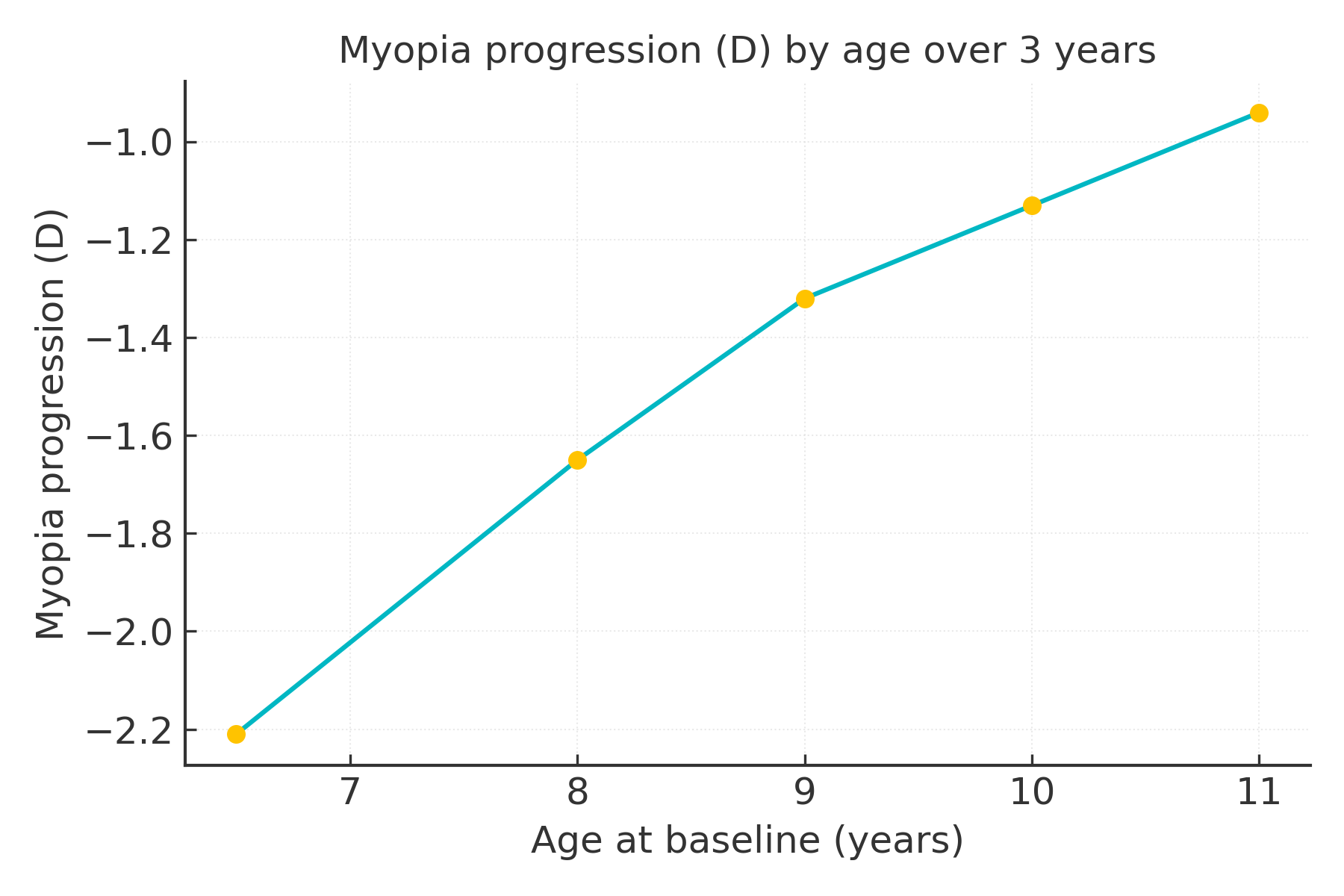
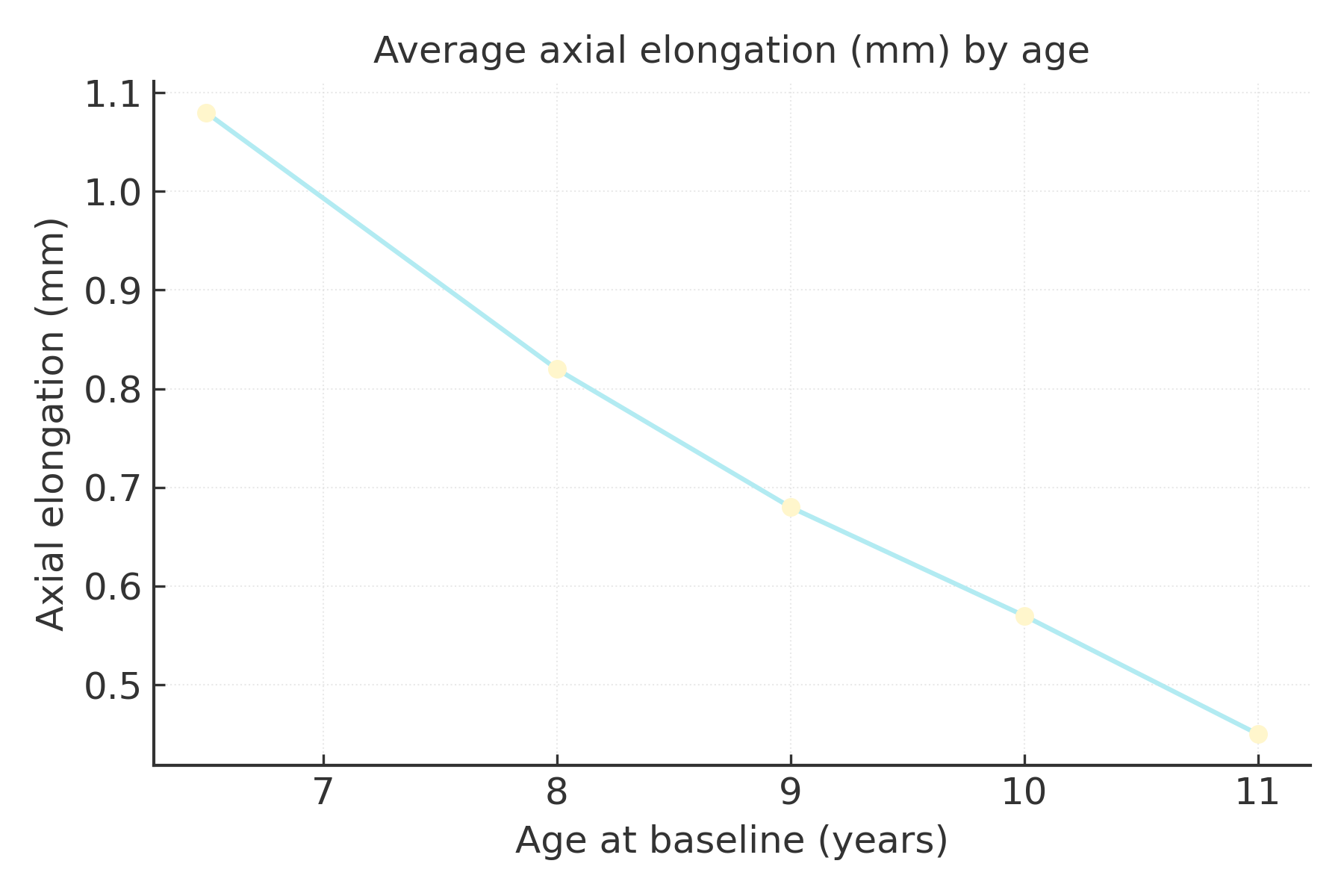
Differences between age groups were evident from the first year of monitoring and persisted throughout the study. In parallel, axial elongation followed the same pattern, with an average increase of 1.08 mm in the youngest and 0.45 mm in the oldest group.
2. Sex differences
Girls showed slightly greater progression than boys, with an adjusted mean difference of 0.16 D after three years. However, the difference in axial elongation between sexes was not statistically significant. This discrepancy can be explained by initial anatomical features: girls’ eyes were, on average, shorter and had a steeper corneal curvature, which may influence ocular mechanics and accommodative response.ù
3. The role of ethnicity
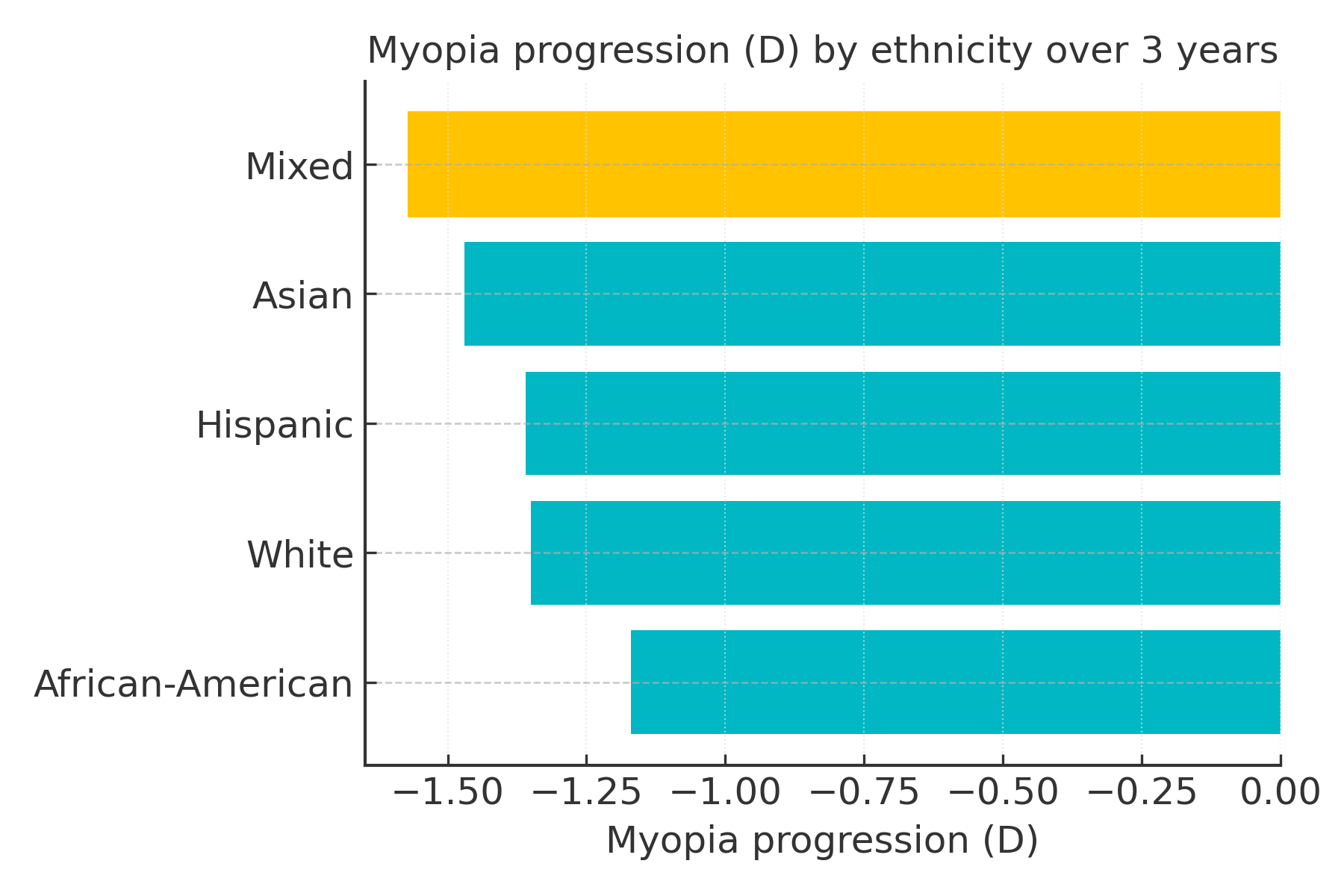
Analysis by ethnic group revealed significant variation in progression rates.
African-American children had the slowest progression (−1.17 D over three years), while children of mixed and Asian ethnicity showed the fastest progression (−1.57 D and −1.47 D, respectively).
Differences in axial elongation followed the same trend: African-American children showed an average increase of 0.60 mm compared with 0.74 mm in Asian children.
Correlation between myopia progression and axial elongation
A direct and strong correlation was observed between refractive change and axial elongation: each 1 D of myopic progression corresponded to an average axial increase of 0.5 mm.
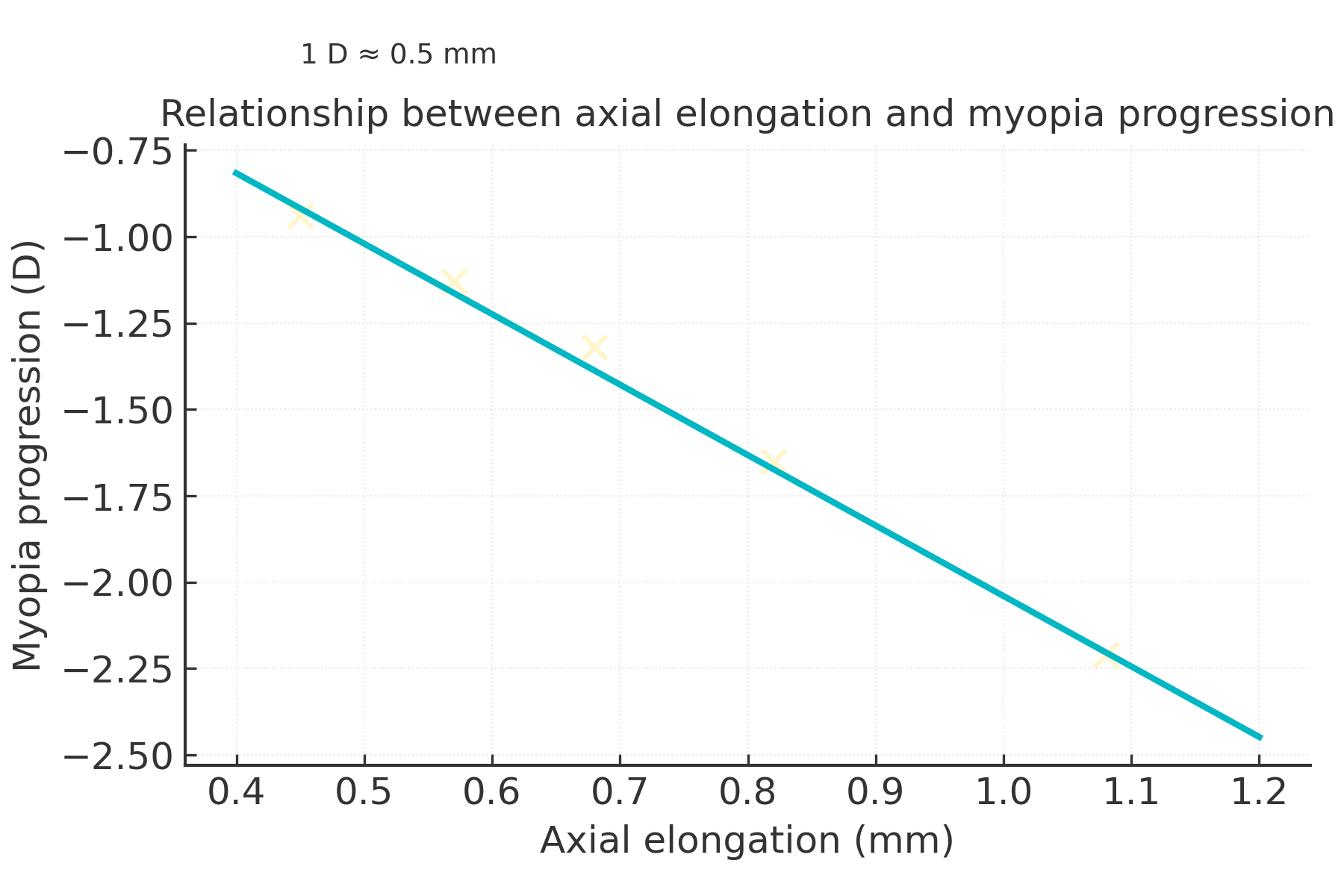
This ratio is smaller than that estimated in adults (1 mm ≈ 3 D), suggesting that during growth, part of the axial elongation also occurs in emmetropic children.
Interpretation and clinical implications
The COMET results confirm that the age at myopia onset is a determining factor for the rate of subsequent progression. Children diagnosed before the age of 8 are at higher risk of developing moderate or high myopia in adulthood.
Ethnic factors may also influence ocular dynamics, likely due to genetic and biomechanical characteristics of the sclera.
In practical terms, these data support the need for more frequent monitoring of young myopic children, as well as careful assessment of axial length—a key objective parameter directly linked to the risk of ocular complications such as retinal detachment, glaucoma, and cataract.
Conclusions
Early onset age is the most important factor associated with rapid myopia progression and axial elongation.
Girls tend to progress slightly faster than boys, though baseline anatomical differences may modulate this effect.
African-American ethnicity appears to have a protective effect against myopia progression.
There is a proportional correlation (1 D ≈ 0.5 mm) between refractive change and axial length, which is crucial for the clinical monitoring of myopic children.
Practical recommendations for specialists
Annual monitoring of refraction and axial length, especially in children under 8 years old.
Early intervention in cases of rapid progression through personalized optical solutions (progressive lenses, accommodative management).
Careful communication with parents about the risks of progressive myopia and the importance of consistent, appropriate correction.
Source: COMET Study Group, Arch Ophthalmol, 2005. Editorial adaptation by Avvero.ro.