Axial elongation in myopia: the role of age and ethnic factors in myopia progression in children
Axial elongation represents the fundamental mechanism of myopia progression and the most reliable indicator of the effectiveness of control interventions.
The meta-analytic study published by Brennan et al. (2024) in Optometry and Vision Science makes a significant contribution to understanding how age and ethnicity influence axial growth in children with mild to moderate myopia.
Methodology and database
The authors analyzed 64 studies, encompassing 83 subpopulations and 142 evaluations of mean axial length change from baseline.
The models were built through multivariate mixed-effects meta-regression, including significant variables such as age, ethnicity, and baseline myopia level.
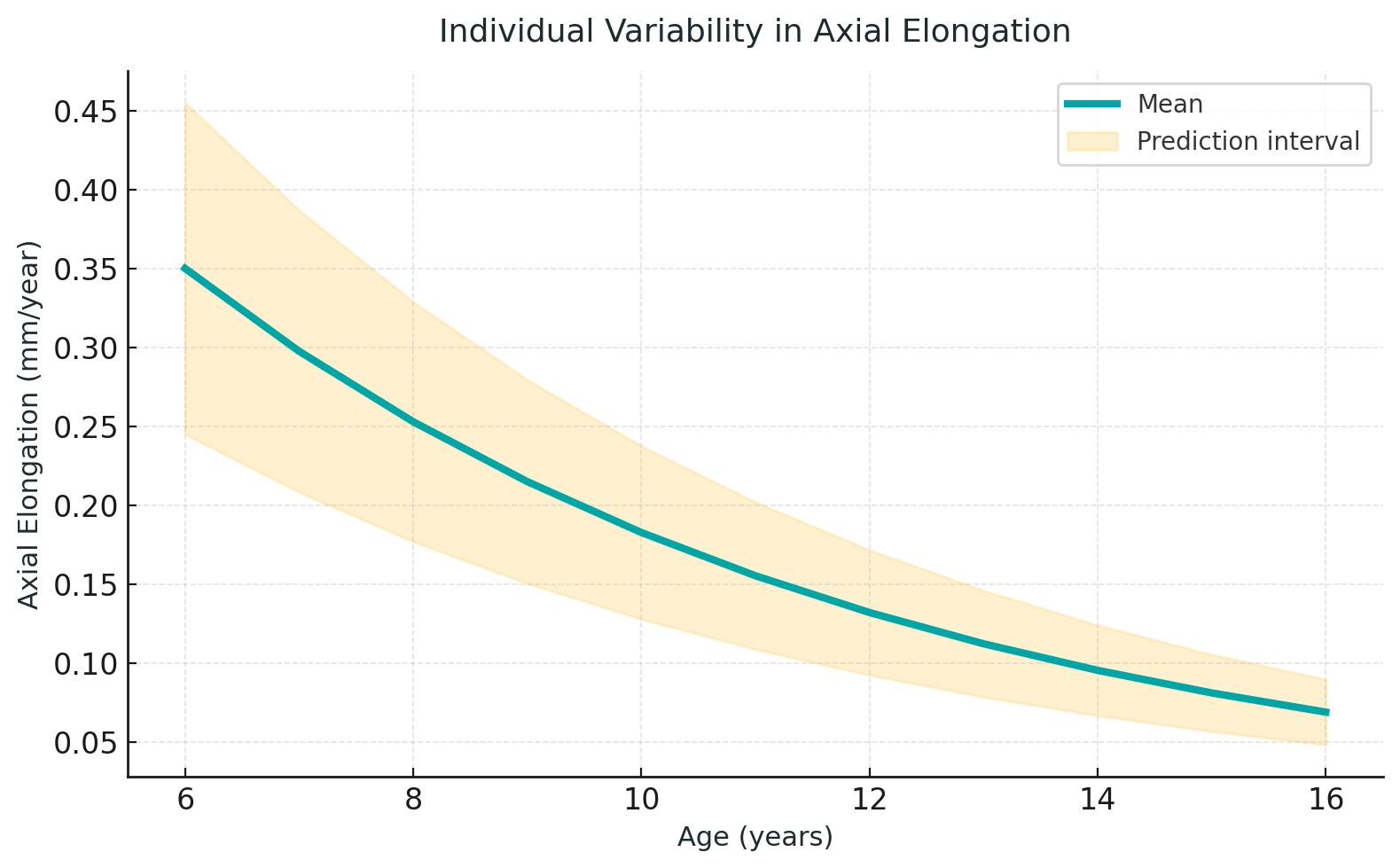
This type of statistical modeling allows not only the estimation of mean values but also the determination of prediction intervals that reflect real variability among children—an essential clinical dimension for personalized management.
Main results
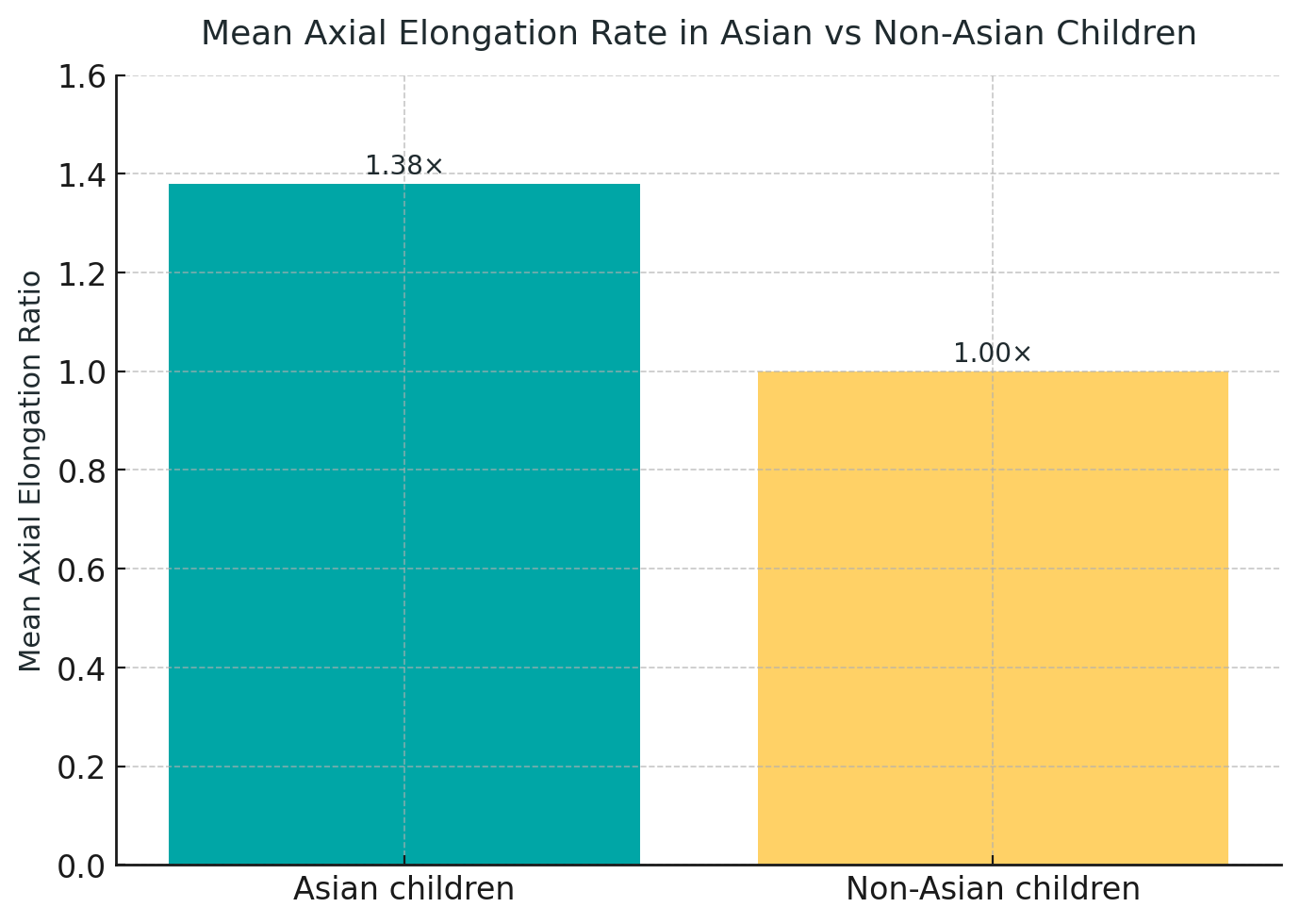
The results show that mean axial elongation was 38% greater in Asian children compared with non-Asian children (95% CI: 19–61%, p<0.01).
This difference underscores the potential influence of genetic and environmental factors, already suggested in the literature regarding the high prevalence of myopia in urban Asian populations.
Both groups exhibited a 15% annual decline in axial elongation rate with increasing age (95% CI: 12–17%, p<0.0001), confirming the hypothesis that the period of accelerated ocular growth occurs primarily in early childhood.
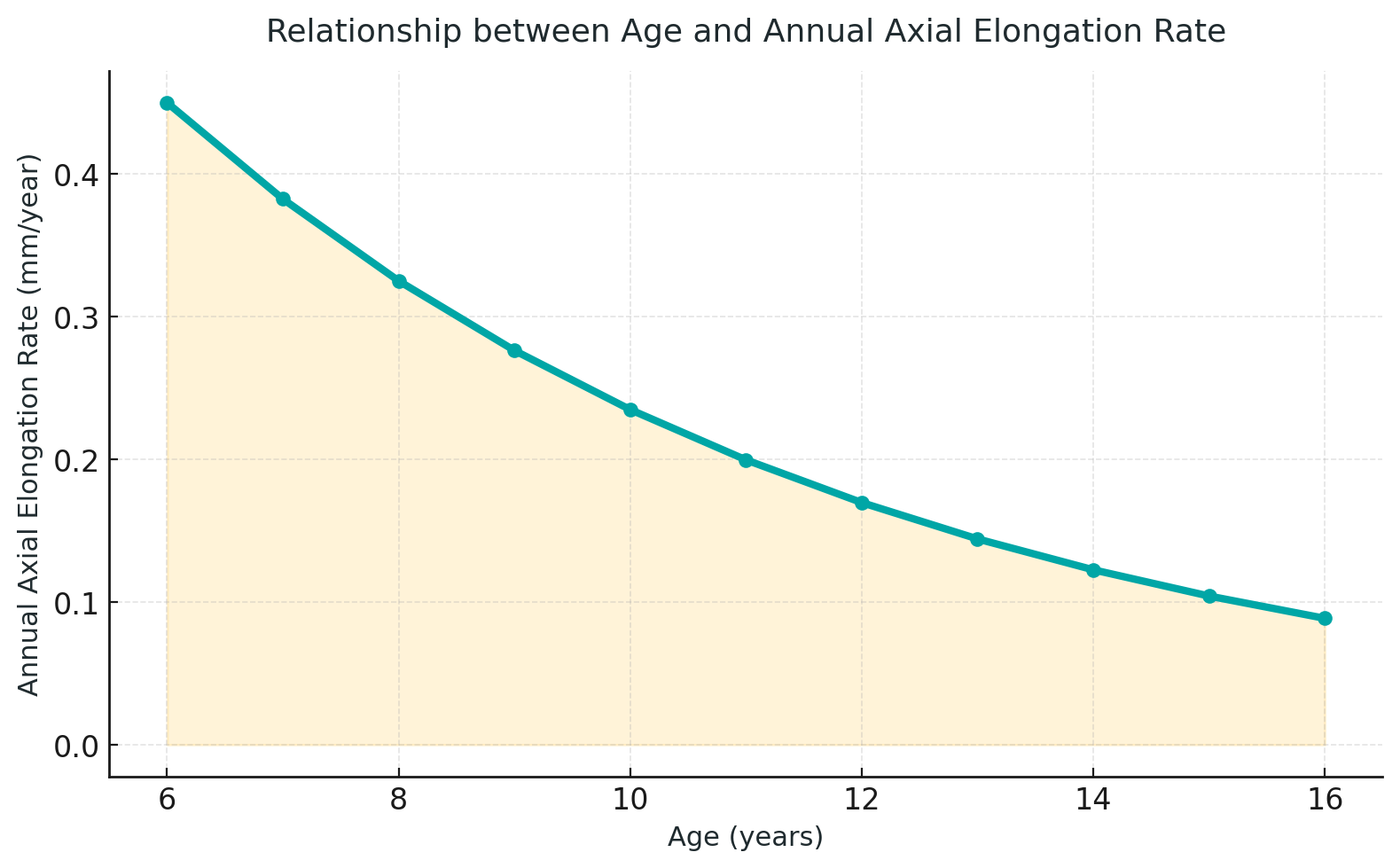
An additional analysis—including populations with incomplete variance or covariate data—produced a similar model, reinforcing the robustness of these conclusions.
However, the broad prediction intervals indicate considerable individual variability, a crucial factor for clinicians monitoring progression at the individual level.
Clinical interpretation and practical implications
These data confirm that axial elongation assessment must be systematically integrated into optometric and ophthalmologic practice, surpassing simple dioptric monitoring.
Ethnic and age differences suggest that myopia management programs must be personalized:
In Asian children, earlier intervention and more frequent monitoring (e.g., orthokeratology, DIMS lenses, low-dose atropine) are justified.
In non-Asian children, a more conservative approach may be appropriate, but continued axial monitoring is recommended until ocular stabilization.
Limitations and perspectives
The authors note a key limitation: the use of aggregated study-level data rather than individual-level data, which may underestimate real clinical variability.
Nevertheless, the consistency of models validated across 202 independent evaluations supports the generalizability of the results.
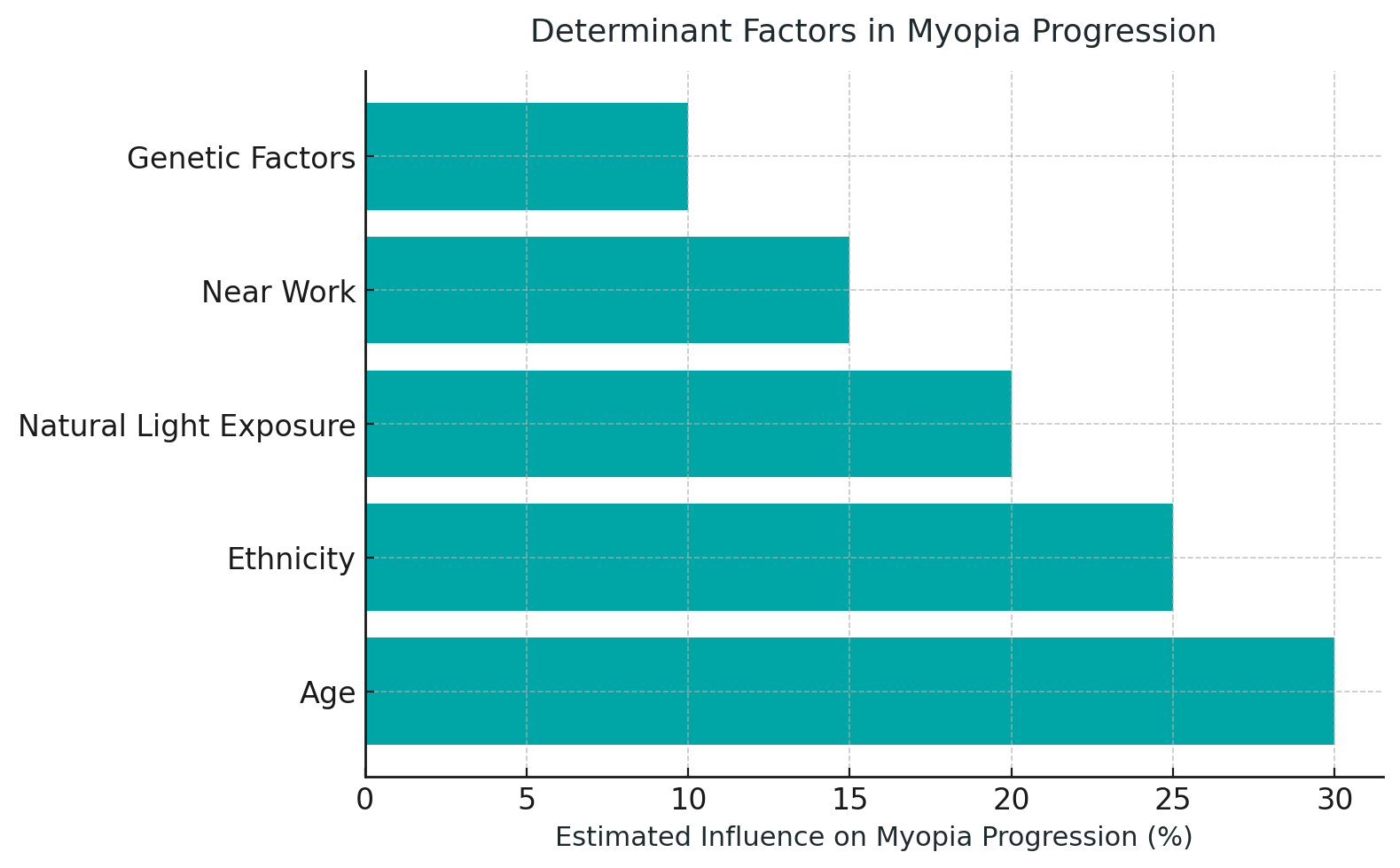
Future longitudinal cohort studies should include individual-level data, standardized axial length measurements, and documented environmental factors such as time spent outdoors and digital device use.
Conclusions
The meta-analysis led by Brennan and colleagues provides solid quantitative benchmarks for evaluating the efficacy of myopia control strategies.
Understanding how age and ethnic factors influence axial growth enables professionals to adopt differentiated protocols and optimize therapeutic outcomes.
In modern clinical practice, axial monitoring is no longer optional—it has become an essential standard for the long-term prevention of myopia-related complications.
Primary Source:
Brennan N.A., Shamp W., Maynes E., Cheng X., Bullimore M.A.
Influence of Age and Race on Axial Elongation in Myopic Children: A Systematic Review and Meta-Regression,
Optometry and Vision Science, vol. 101, no. 8, 2024, pp. 497–507.