Global myopia epidemic: perspectives and implications to 2050
Myopia is currently one of the most common causes of vision loss worldwide. According to a study published in Ophthalmology (Holden et al., 2016), it is estimated that by 2050 almost half of the world’s population will be myopic, and nearly one billion people will develop high myopia (≥ −5.00 D). This exponential increase has major consequences for global ocular health and for planning vision care services.
Background and methodology
The research conducted by Holden and colleagues was a systematic review and meta-analysis that included 145 studies from around the world, totaling over 2.1 million participants.
Data were organized in 5-year age bands (0–100+ years) and differentiated between urban and rural settings. Definitions were standardized as follows:
- myopia: ≤ −0.50 D
- high myopia: ≤ −5.00 D
Prevalence estimates were aggregated by regions according to the Global Burden of Disease (GBD) classification, and demographic and urbanization data were correlated with projections from the United Nations Population Division (UNPD). Regression models enabled extrapolation of prevalence trends to 2050, accounting for factors such as urbanization and the Human Development Index (HDI).

Key findings
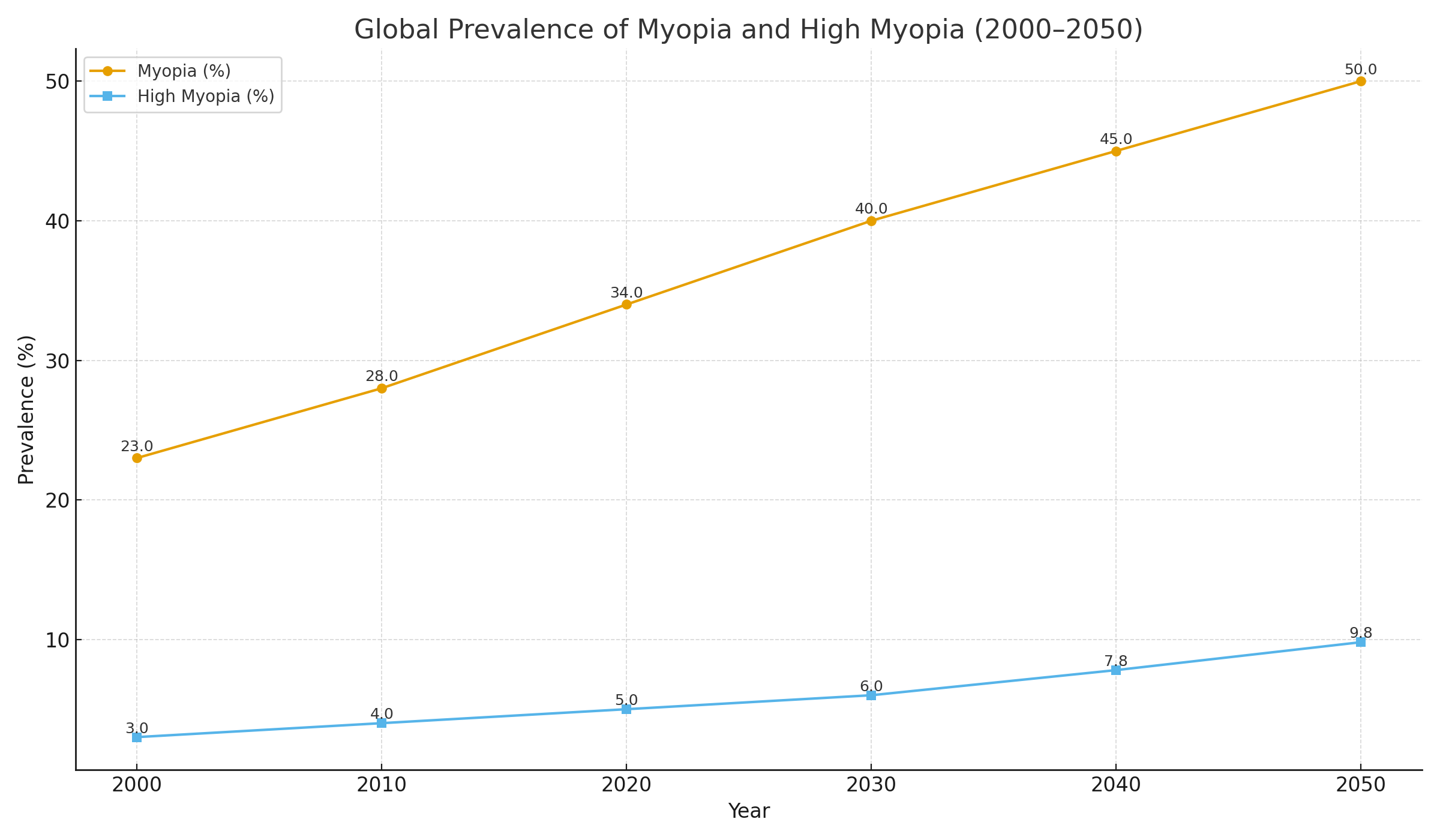
In 2000, there were approximately 1.4 billion people with myopia worldwide (22.9%) and 163 million with high myopia (2.7%).
Projections for 2050 are concerning:
- 4.76 billion people will be myopic (≈ 49.8% of the global population)
- 938 million will have high myopia (≈ 9.8% of the global population)
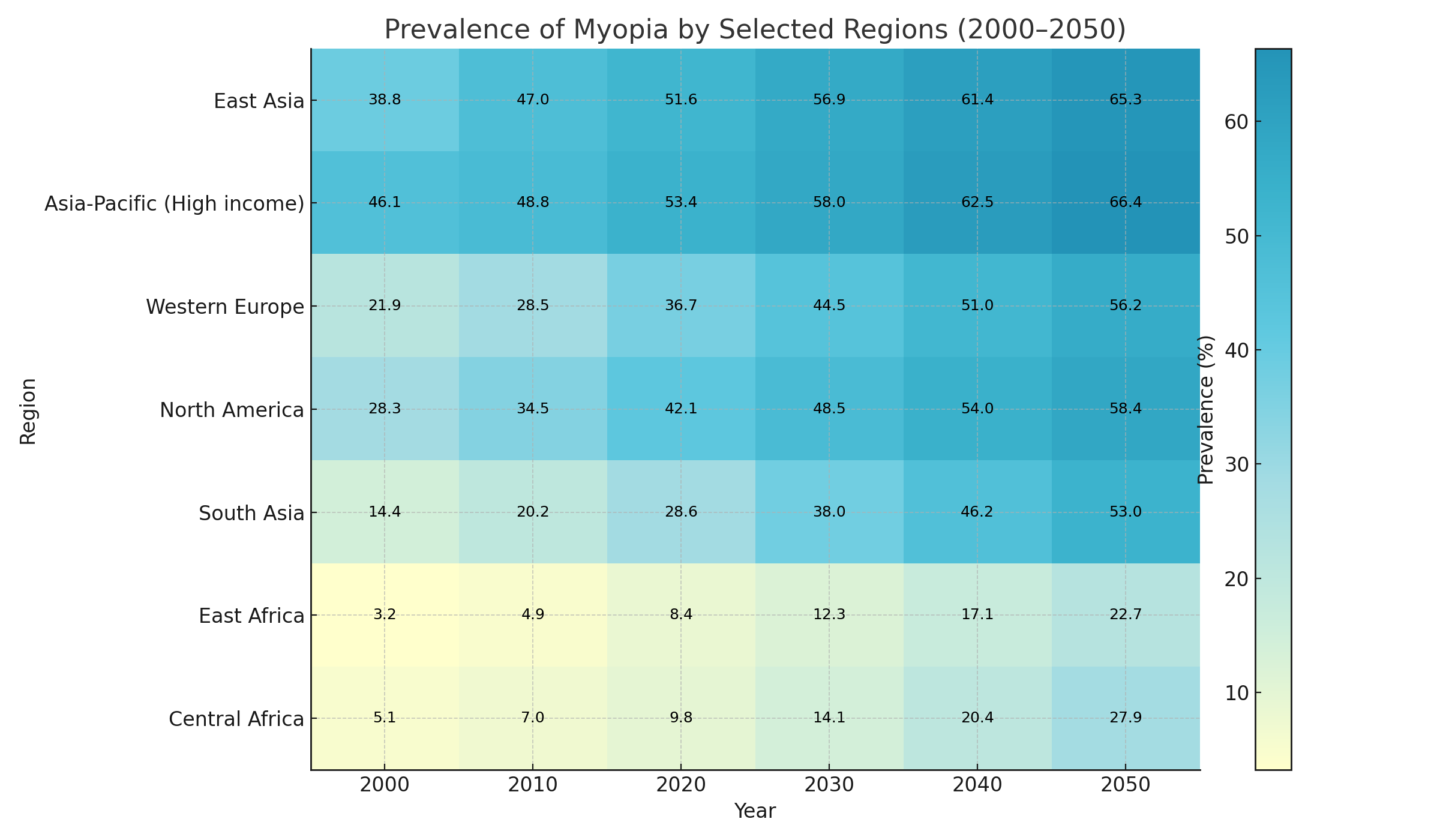
Regional differences are substantial. High-income countries in the Asia-Pacific region and East Asia show the highest values, with prevalence projected to exceed 65% by 2050. In contrast, Sub-Saharan Africa and Oceania start from lower levels but are expected to experience accelerated growth.
In 2000, most myopia cases were concentrated among individuals aged 10–39, a pattern that suggests an aging myopic population over time.

Analysis and interpretation
The global rise in myopia results from a complex combination of behavioral, educational, and environmental factors, superimposed on genetic predisposition.
Trends identified in East Asia indicate a strong link with:
- reduced time spent outdoors
- near visual activities (reading, screen use)
- intense educational pressure from early ages
For example, local studies show that in Taiwan the proportion of high myopia among students increased from 10.9% in 1983 to 21% in 2000, while in urban China the prevalence of myopia exceeds 80% among adolescents.
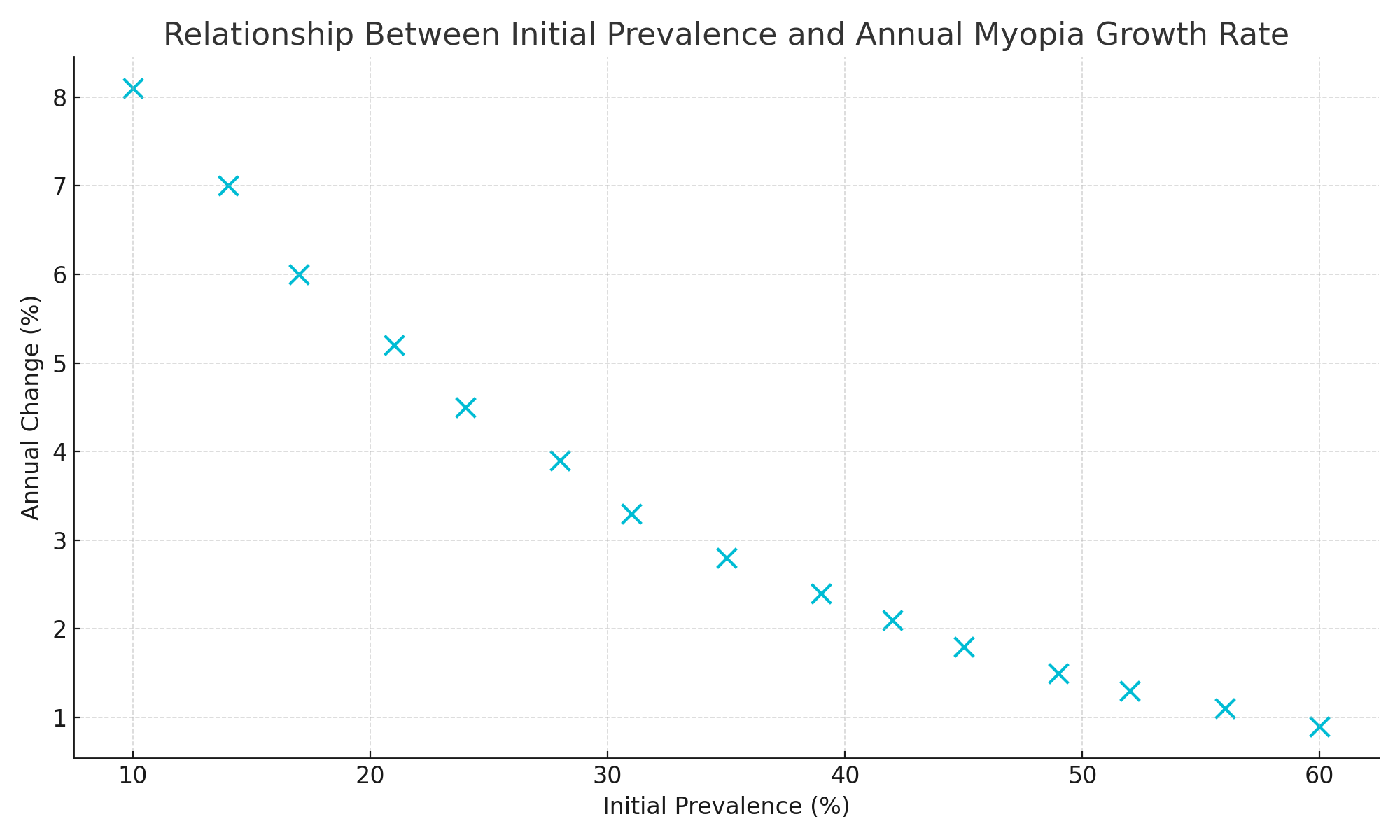
Long-term analysis shows a direct correlation between the degree of urbanization and myopia prevalence (R² = 0.07), but the strongest relationship is between initial prevalence and the subsequent rate of increase (R² = 0.86), suggesting that regions already affected will continue to record the largest rises.
Implications for professional practice
Projections indicate that by 2050:
- the number of people with myopia will double
- the number with high myopia will increase fivefold
- vision loss due to myopic macular degeneration could increase sevenfold compared with 2000
For optometrists and ophthalmologists, these data underline the urgency of adopting integrated strategies to control myopia progression, including:
- early detection and monitoring of axial elongation
- prescribing specialized spectacle lenses for myopia control
- behavioral interventions such as daily exposure to natural light (≥ 2 hours/day) and limiting screen time
- education for parents and children on visual hygiene
Perspectives and limitations
The authors note that predictive models may slightly overestimate prevalence in low socioeconomic regions due to limited local data. In addition, the projections do not incorporate the impact of modern myopia control interventions which, if implemented widely, could significantly reduce the incidence of severe cases.
Despite these limitations, the robust methodology and large dataset give the study reference value in epidemiology. It is currently considered the most extensive global model estimating myopia prevalence.
Conclusions
Myopia is rapidly becoming a major public health problem. By mid-century, one in two people may be affected, and complications associated with high myopia will represent a leading cause of irreversible blindness.
The responsibility of eye care professionals is twofold: early implementation of prevention strategies and adaptation of clinical services to manage an increasingly large myopic population. Research, education, and interdisciplinary collaboration will be essential pillars in addressing this “silent epidemic.”
Source: Holden B.A. et al., Ophthalmology, 2016 — Global prevalence of myopia and high myopia and temporal trends from 2000 through 2050.