Myopia control: balancing benefits, risks, and clinical reality
The current context: a global epidemic with local impact
Over the past two decades, myopia has become a true global visual epidemic. It is estimated that by 2050, half of the world’s population will be myopic, and more than 10% will develop severe forms (greater than –6 D). This trend also affects Romania and Central Europe, where regional data show that one in three adolescents already exhibits signs of progressive myopia.
The rapid increase in pediatric cases has multiple causes: urbanization, digital education, reduced exposure to natural light, and the absence of preventive optometric screenings. For eye care professionals, myopia is no longer a simple refractive issue, but a medical and social challenge.
Why myopia control matters
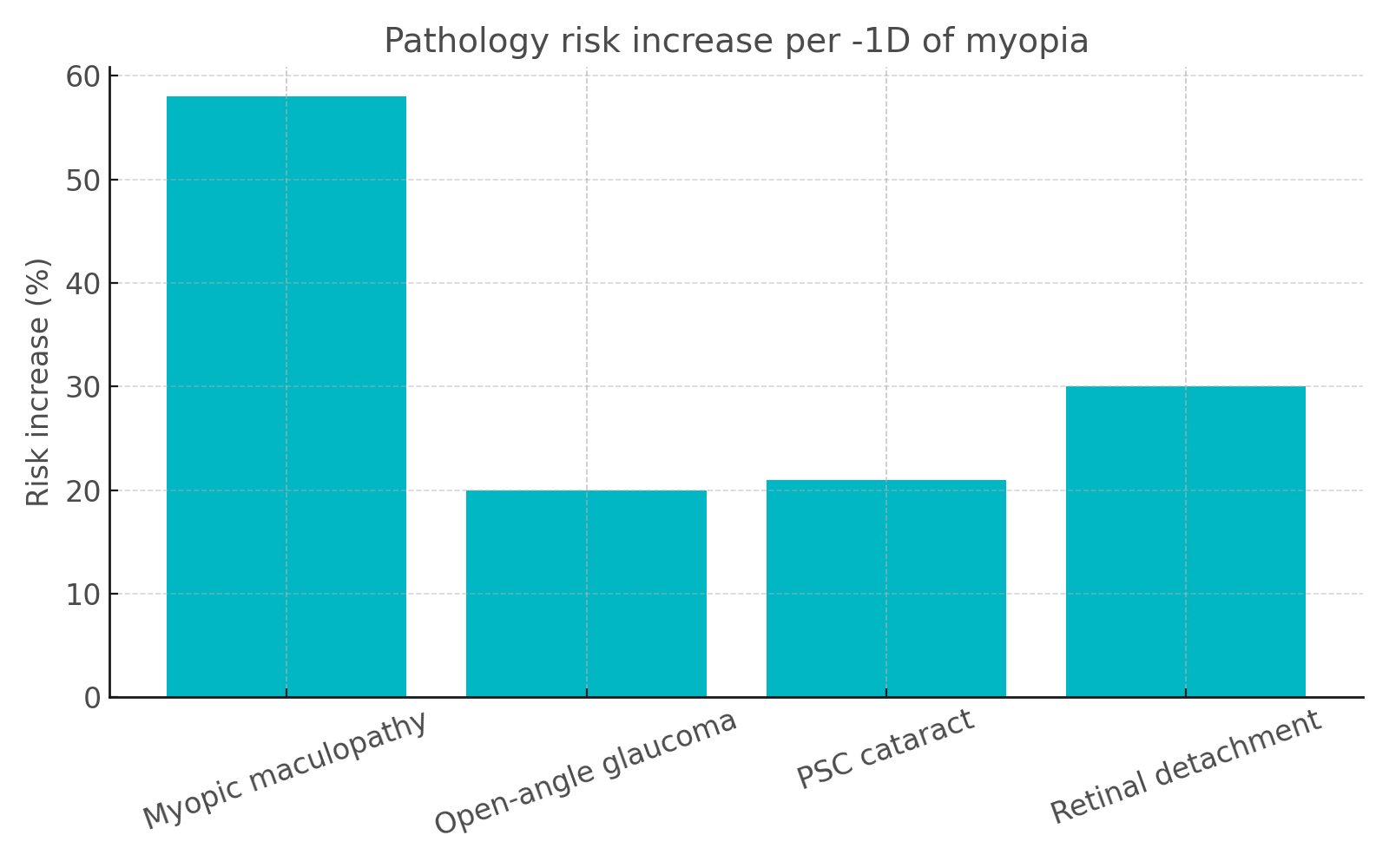
Myopia is not merely blurred distance vision. As the axial length of the eye increases, structural changes occur in the retina and sclera, exponentially raising the risk of:
- myopic maculopathy (early macular degeneration)
- retinal detachment
- posterior subcapsular cataract (PSC)
- open-angle glaucoma
Therefore, the goal of myopia control is not only refractive but also preventive — to reduce the risk of severe long-term visual impairment.
Clinical data: the balance between risk and benefit
The analysis conducted by Bullimore et al. (Ophthalmology, 2021) provides a robust model for evaluating the risk–benefit ratio of the main available interventions: topical atropine, soft multifocal contact lenses, orthokeratology, and specially designed ophthalmic lenses.
Main conclusion: “The clinical benefits of myopia control clearly outweigh the associated risks.”
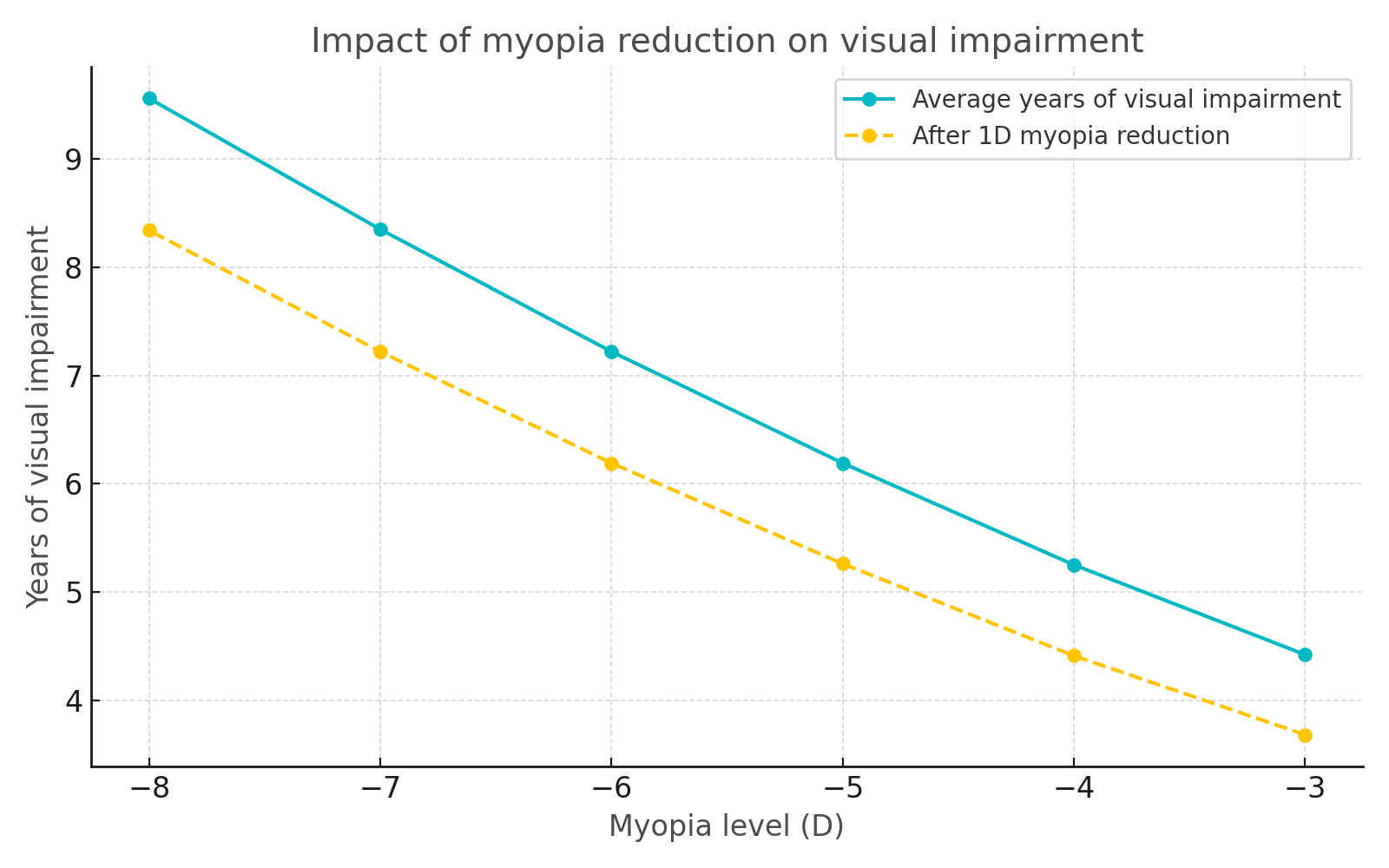
Each diopter of controlled myopia results in a significant reduction in pathological risk:
Risks associated with treatment methods
Topical atropine
Low-concentration atropine (0.01–0.05%) is well tolerated, with minimal adverse effects (mild photophobia, conjunctivitis). Studies show that over 90% of patients continue treatment without interruption, and systemic reactions are virtually nonexistent.
Soft multifocal contact lenses
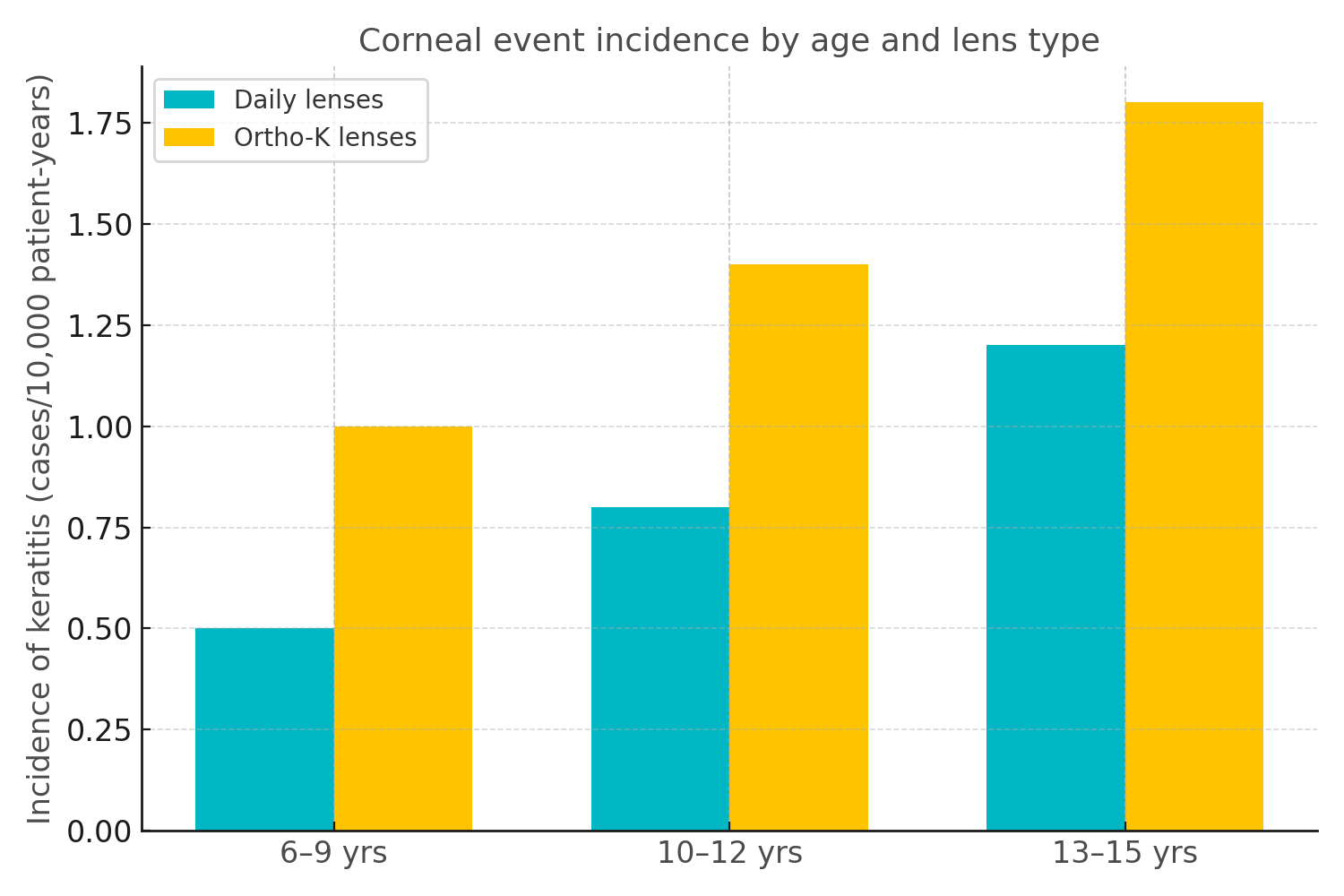
The incidence of microbial keratitis in daily disposable wearers is estimated at 1 case per 10,000 patient-years, and only 15% of these cases result in permanent visual loss.
Overnight orthokeratology
The risk profile is comparable to other overnight modalities (approximately 14 cases per 10,000 patient-years), with no reported cases of bilateral visual loss.
Benefits of controlling myopia progression
Statistical modeling demonstrates that each diopter of controlled myopia during childhood provides:
- 0.74–1.22 additional years of functional vision over a lifetime
- 37% reduction in the risk of myopic maculopathy
- Over 30% overall reduction in the probability of moderate visual impairment
Clinical integration of myopia control
In daily practice, the success of myopia control depends on personalizing the therapeutic decision.
Key recommendations for professionals:
- Annual axial length assessment — more predictive than refraction alone.
- Early intervention — ideally between ages 7 and 9, when progression is fastest.
- Treatment selection based on patient profile:

Perspectives and future directions
As myopia prevalence continues to rise, professionals must adopt an interdisciplinary approach:
- collaboration among optometrists, ophthalmologists, and pediatricians
- educational campaigns for parents and schools
- integration of digital monitoring tools (tele-optometry)
In the future, combination therapies — for example, atropine combined with multifocal optical designs — may yield cumulative benefits. Ongoing research is also exploring selective antimuscarinic agents and customized optical designs based on ocular biometry.
Ophthalmic lenses with peripheral defocus integration (DIMS / HAL)
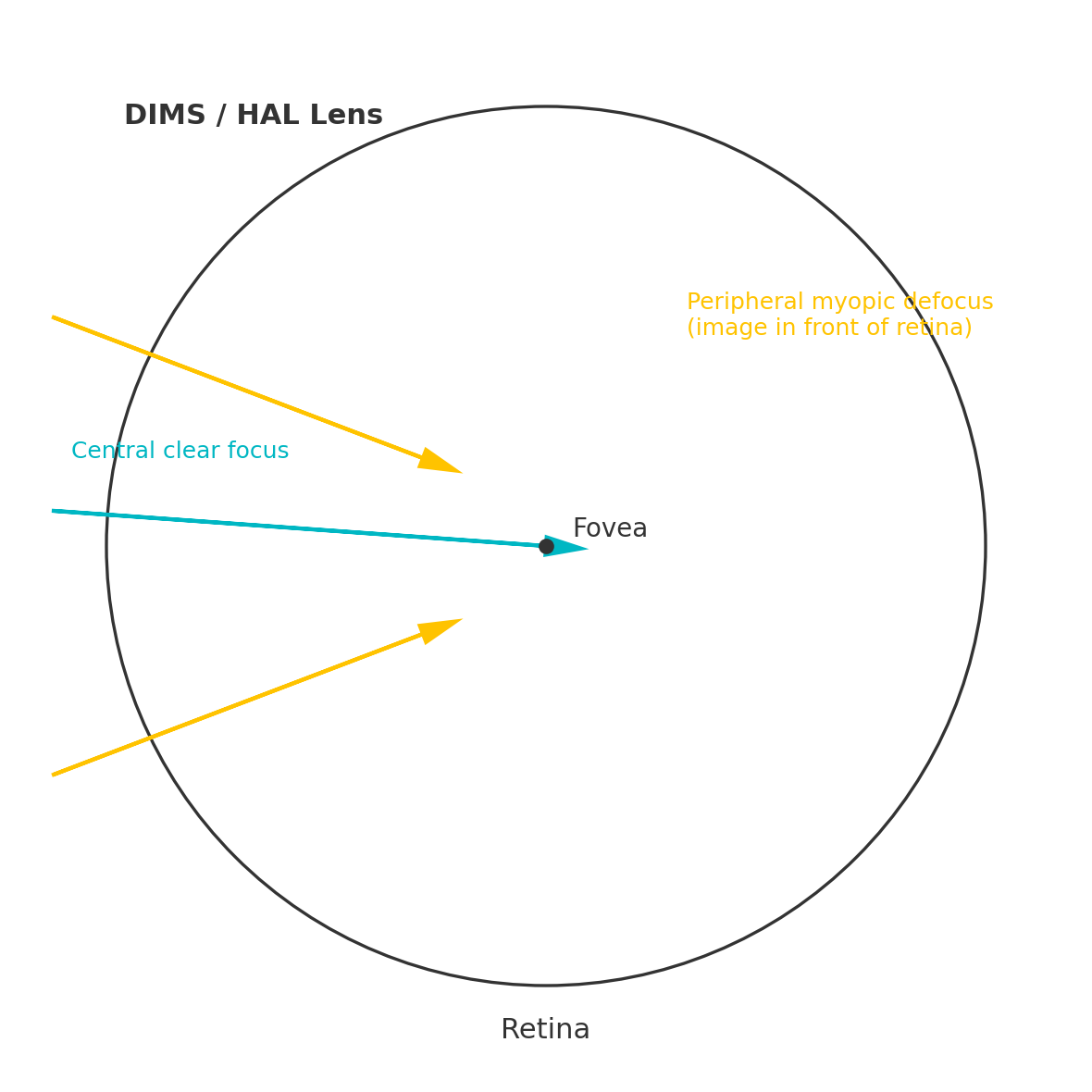
In recent years, ophthalmic lenses with integrated peripheral defocus (DIMS / HAL) have emerged as a non-invasive option for younger children or those unable to wear contact lenses.
These lenses create a peripheral myopic defocus zone, reducing the stimulus for axial elongation. Recent studies show a 50–60% slowdown in myopia progression compared to standard monofocal correction, with no significant adverse effects.
Such devices can be considered a first-line or complementary option in a comprehensive myopia control strategy.
Conclusions
The analysis conducted by Bullimore and colleagues clearly shows that the benefits of myopia control outweigh the risks associated with current interventions. Even under conservative conditions, risk models indicate that treating just 4–7 patients can prevent five years of visual impairment, while the probability of treatment-related visual loss is less than 1 in 38 cases.
In other words, a reduction of only one diopter in myopia progression — representing a modest slowing of axial elongation — may correspond to up to one additional year of life without visual impairment. In higher myopia cases, the protective effect is even greater.
These results confirm that myopia control strategies, when applied correctly and carefully monitored, represent a scientifically justified intervention with real value in preventing long-term ocular complications.
Source: Bullimore, M. A., & Brennan, N. A. (2021). The Risks and Benefits of Myopia Control. Ophthalmology, 128(11), 1561–1579.