Single-vision lenses and their effect on peripheral defocus in myopic children
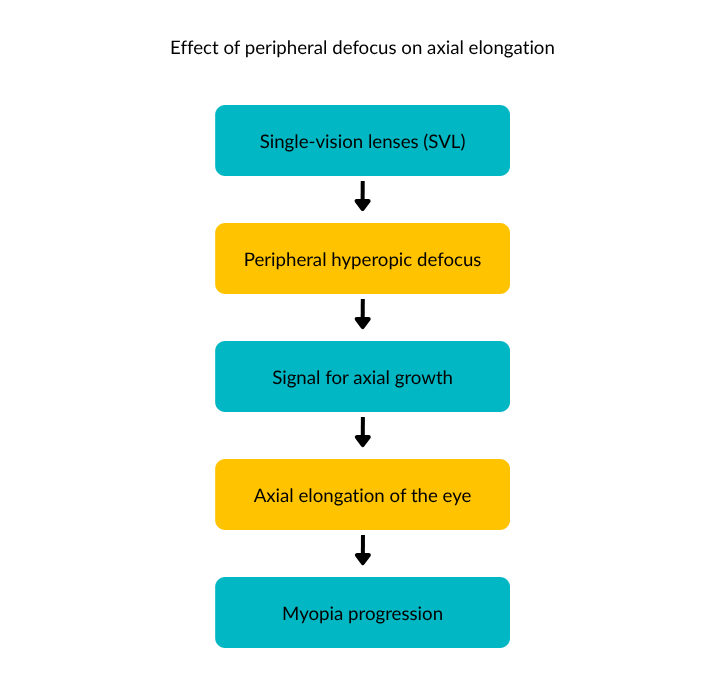
Myopia progression in children remains a major topic of concern in modern optometric and ophthalmological practice. Despite extensive research, the precise mechanisms driving axial elongation of the eye are not yet fully understood. In recent years, the hypothesis has gained traction that peripheral hyperopic defocus may act as a significant stimulus for axial growth and, consequently, for the progression of myopia.
A study conducted by Lin et al. (2010) at the Zhongshan Ophthalmic Center analyzed the impact of single-vision lenses (SVLs) on peripheral refraction in Chinese children with mild and moderate myopia. The findings provide valuable insight into how traditional optical correction influences peripheral visual signals and the potential consequences for myopia evolution.
Methodology
The study included 28 children, aged 8 to 15 years, divided into two groups:
- Mild myopia: −0.75 D to −3.00 D
- Moderate myopia: −3.25 D to −6.00 D
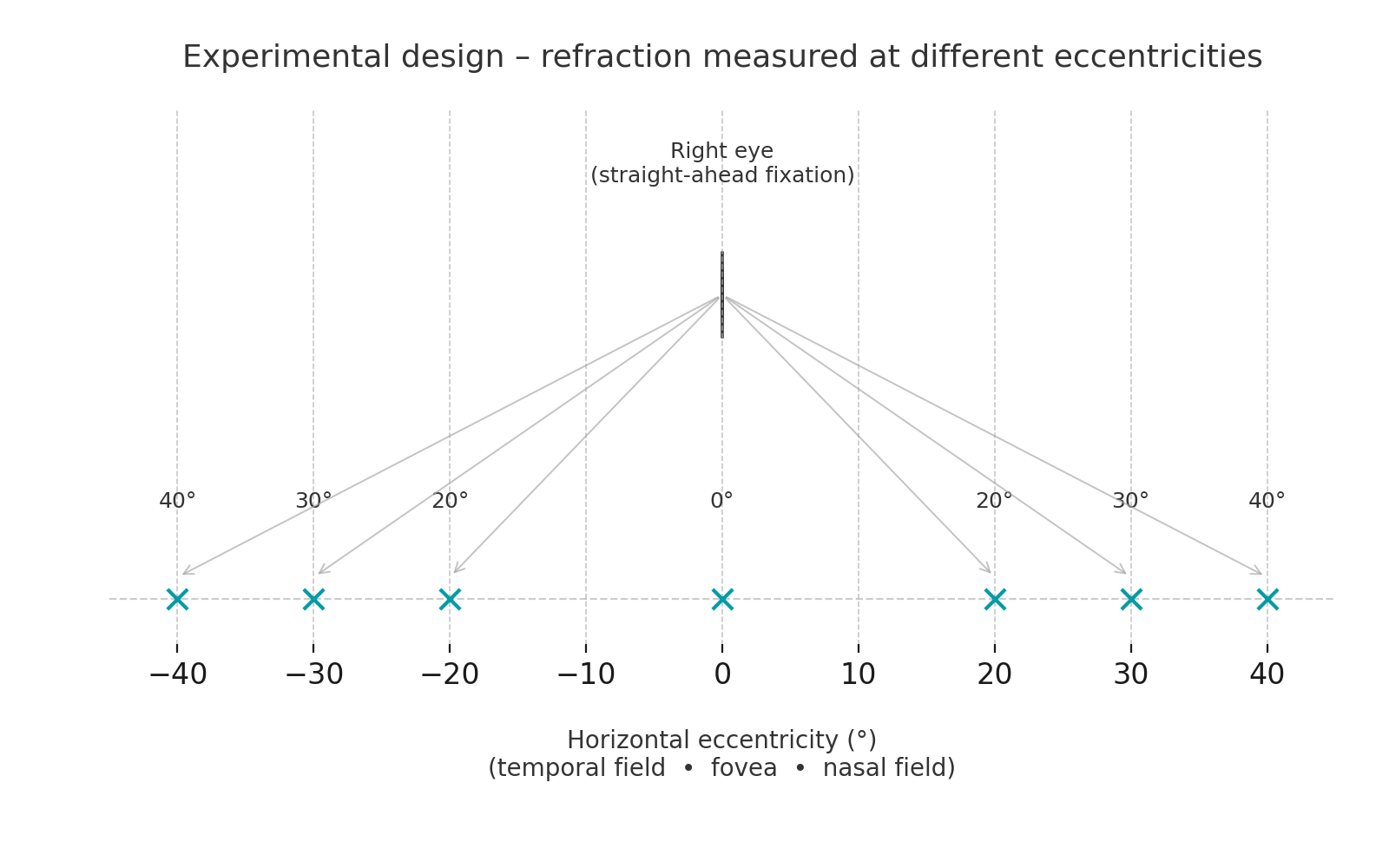
All participants underwent central and peripheral refraction measurements (at 20°, 30°, and 40° in both nasal and temporal visual fields), both uncorrected and while wearing spherical single-vision lenses.
To eliminate accommodation and ensure standardized conditions, tropicamide 1% was used for cycloplegia. Measurements were taken with a Shin-Nippon NVision–K5001 autorefractor, and data were statistically analyzed using SPSS 15.0.
Key results
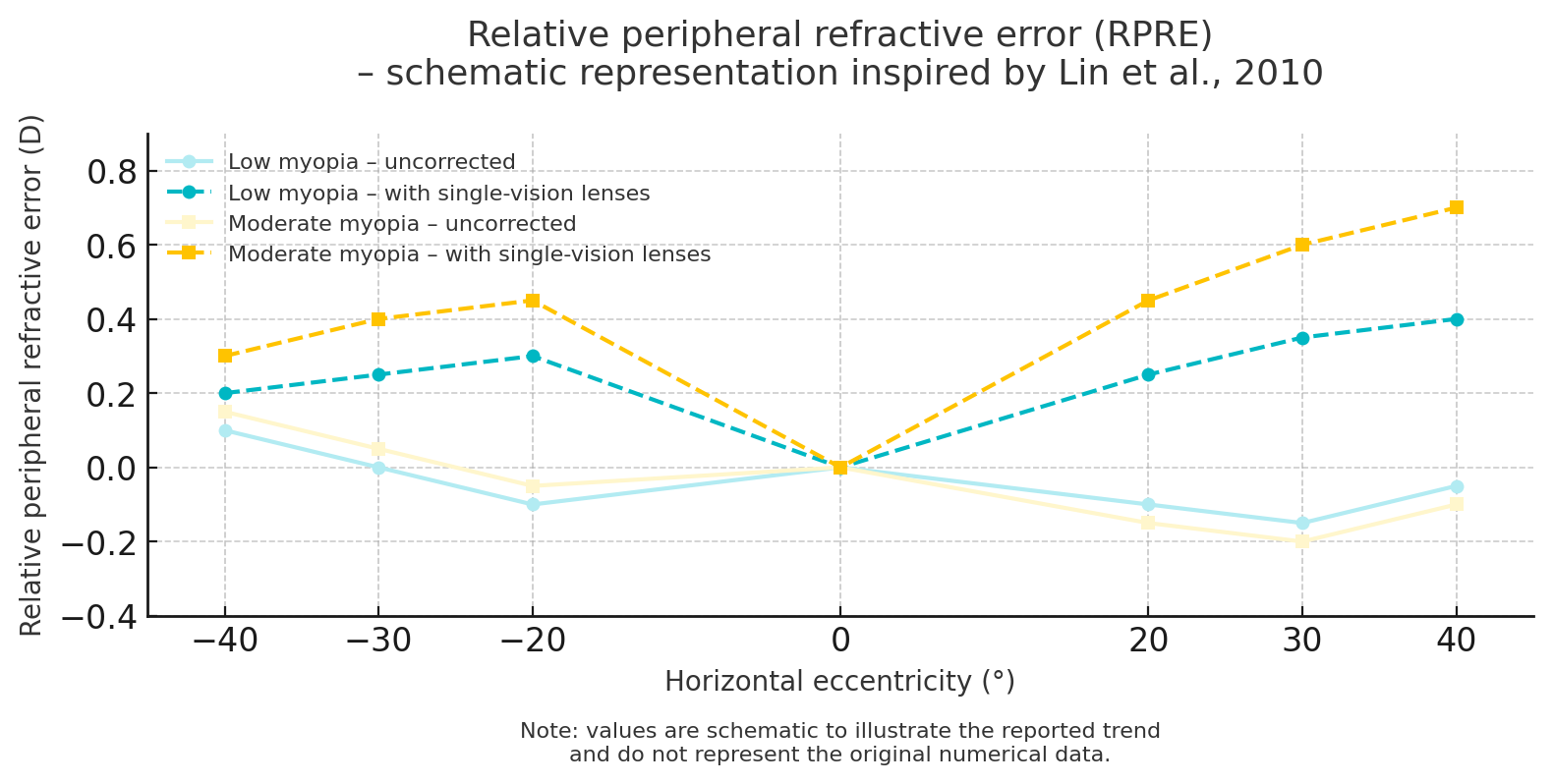
In children with moderate myopia, wearing single-vision lenses resulted in a significant increase in peripheral hyperopic defocus compared with the uncorrected state (p < 0.038).
This effect was more pronounced:
- in the nasal field at 40°, and
- in the temporal field at 30° and 40°.
By contrast, in the mild-myopia group, the differences did not reach statistical significance.
Vector analysis of astigmatism also showed an increase in the oblique component (J45) among moderately myopic children, particularly in the peripheral nasal field (p < 0.05), indicating additional optical distortion caused by lens geometry.
Interpretation and discussion
The findings confirm the hypothesis that traditional single-vision lenses induce peripheral hyperopic defocus, a phenomenon that may promote axial elongation.
This effect is more marked in moderate myopia, where the higher negative lens power alters the field curvature and shifts the peripheral image plane posteriorly.
Interestingly, the authors observed that even in the uncorrected state, myopic eyes already exhibit slight relative peripheral hyperopia, but the application of single-vision correction amplifies this imbalance.
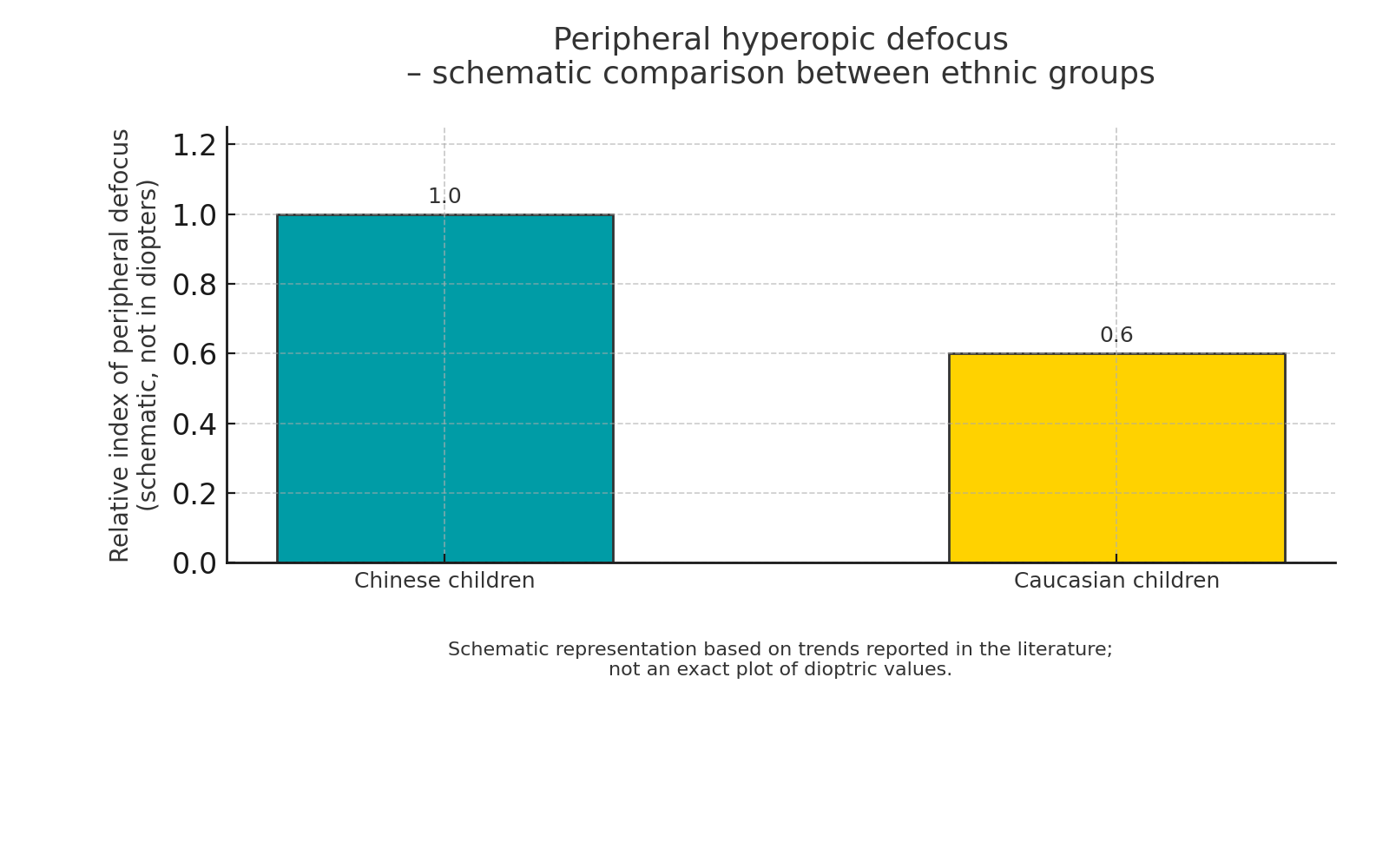
Compared with Caucasian populations, the Chinese children in the study displayed greater peripheral defocus, possibly related to ethnic differences in ocular morphology (e.g., anterior-posterior axis ratio, peripheral scleral elongation).
Astigmatic aspects and optical implications
The increase in oblique astigmatism (J45) observed in moderate myopia suggests that, beyond spherical defocus, oblique aberrations may also contribute to non-uniform peripheral visual signaling.
A possible optical factor is pantoscopic lens tilt, which changes the incidence angle of peripheral rays. However, the authors excluded alignment errors, confirming an inherent optical causality within the single-vision design itself.
Clinical implications for eye-care professionals
From a clinical perspective, these findings have direct implications for the design of optical solutions in myopia control.
If single-vision lenses exacerbate peripheral hyperopic defocus, then optical alternatives that neutralize or reverse peripheral defocus (e.g., lenses with integrated myopic defocus or multifocal contact lenses with peripheral power modulation) may have preventive or therapeutic benefits.
Therefore, assessment of the peripheral refractive profile should become a standard component of pediatric myopia examinations, especially in cases exhibiting rapid progression.
Conclusions
The study by Lin et al. demonstrates that conventional single-vision lenses are not optically neutral in the periphery: they induce a degree of hyperopic defocus that increases with both myopia severity and eccentric viewing angle.
Although the cross-sectional design does not allow conclusions about the true rate of myopia progression, the data strongly support the development of customized optical designs capable of maintaining a uniform refractive profile across the retina.
For practitioners, this research underscores the importance of considering not only central correction but also peripheral refractive balance when prescribing lenses for myopic children.
Source: Lin et al., 2010 – Optometry and Vision Science, vol. 87 (1): 4–9.